Trusted Brake Repair Charlotte NC: Stop Safely Again
Brakes are the one system on a car nobody wants to gamble with, yet they wear so gradually that many drivers do not notice how far they have slipped until a noise or a shudder forces the issue. Charlotte traffic does them no favors. Rush hour on I-77, the stop-and-go crawl on Independence Boulevard and the steady downhill grades in neighborhoods like Myers Park all add up. This guide explains how your brakes work, what different noises and pedal feelings are telling you, why rotors warp, why brake fluid needs attention, and how a brake repair works when a mechanic comes to your driveway, apartment lot or office garage.
Mobile Auto Repair Pros comes to you anywhere in the Charlotte area. Call 704-842-9774 and we will get a mechanic headed your way.
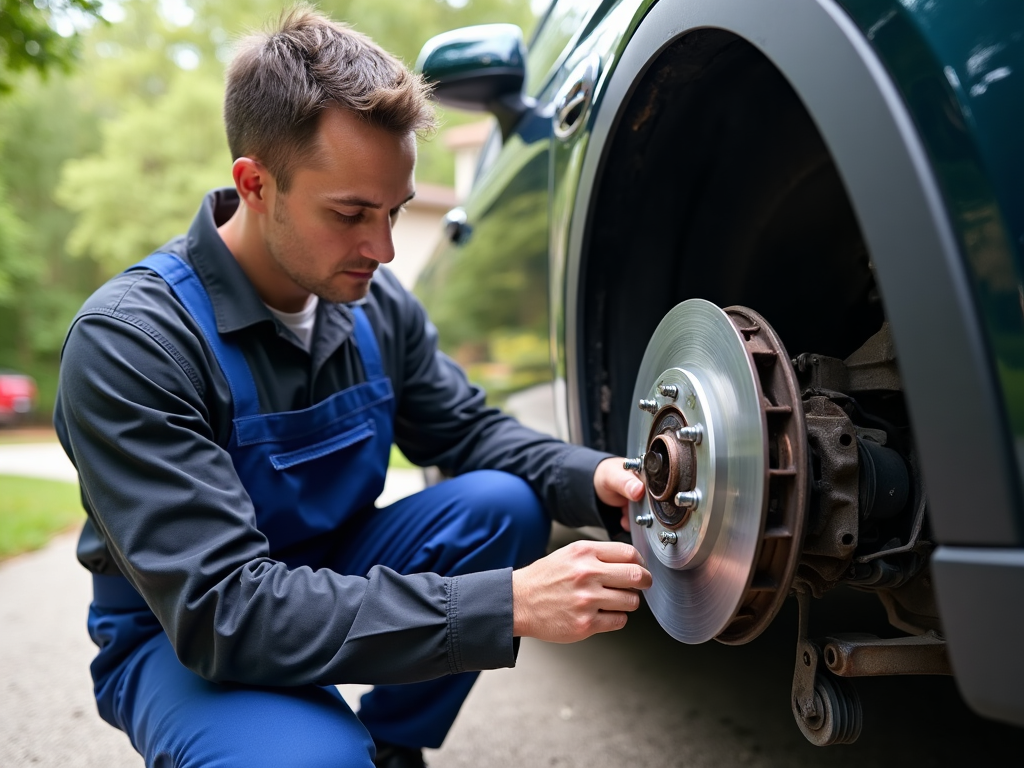
How Your Brakes Actually Work
When you press the brake pedal, you push fluid from the master cylinder through steel lines and rubber hoses to each wheel. At the front, and on the rear of most newer cars, that fluid pressure squeezes a caliper, which clamps brake pads against a spinning metal rotor. The friction turns the car’s motion into heat and slows the wheels. Some older cars and many trucks still use drum brakes on the rear, where curved shoes press outward against the inside of a drum. Antilock brakes add sensors and a control unit that pulse the pressure during hard stops so the wheels do not lock up and you can still steer. Every part in that chain wears or ages, and the pads wear fastest, because they are designed to be the part that gets used up.
Why Charlotte Driving Wears Brakes Faster
Brake wear depends far more on how often you stop than on how many miles you drive. A car that spends most of its time on the open highway can go a long time between brake jobs, while one that commutes through uptown traffic wears pads much faster. Charlotte has plenty of the second kind of driving: rush hour backups on I-77 and I-85, the long string of lights on South Boulevard, and school pickup lines. Heat adds to the wear. Hot summer days and repeated hard stops raise rotor temperatures, which can glaze pads and stress rotors. Rolling hills in areas like Dilworth and Plaza Midwood mean more braking on the way down, too. If your driving is mostly in town, plan on having the brakes checked more often than the mileage alone would suggest.
What Brake Noises Are Telling You
A high-pitched squeal when you first press the pedal often comes from the small metal wear indicator built into many brake pads. It is designed to make noise when the pad material gets thin, so treat it as an early warning. A grinding or growling sound is more serious. It usually means the pad material is gone and the metal backing plate is scraping the rotor, which damages the rotor quickly and reduces stopping power. A clicking or clunking noise can point to loose hardware or a caliper that shifts in its mount. Some light squeaking on damp mornings is normal, since a thin layer of surface rust forms on the rotors overnight and wipes off after a few stops. Any noise that persists or gets louder deserves a look.
What the Pedal and Steering Wheel Are Telling You
How the pedal feels says a lot about the hydraulic side of the system. A pedal that feels soft, spongy or sinks closer to the floor than it used to can mean air or moisture in the fluid, a leak in a line or hose, or a worn master cylinder. A pedal that feels hard and needs more effort can point to a problem with the power brake booster. If the car pulls to one side when you brake, one caliper may be sticking, a brake hose may be collapsing inside, or the pads may be worn unevenly. A pulsing pedal or a steering wheel that shakes when you slow down from highway speed usually means the rotors have worn unevenly. A burning smell after a long downhill or repeated hard stops can mean a caliper is dragging. A dragging brake can overheat and should be checked soon.
Why Rotors Warp and When They Need Replacing
What drivers call warped rotors is usually uneven thickness across the rotor face. It develops when pad material builds up unevenly or when a hot rotor cools unevenly, such as after a hard stop followed by sitting at a light with the brakes held firmly. The uneven surface makes the pedal pulse and the steering wheel shake. Every rotor also has a minimum thickness stamped on it. As it wears thinner, it holds less heat and is more likely to crack or vibrate. The mechanic measures each rotor with a micrometer and checks it for runout, scoring and heat cracks. Rotors that are still within specification and run true can stay on the car. Rotors that are below minimum thickness, badly scored or vibrating need to be replaced along with the pads.
Brake Fluid Is Easy to Forget
Brake fluid absorbs moisture from the air over time, and Charlotte humidity speeds that up. Water in the fluid lowers its boiling point, so after repeated hard stops it can boil and create vapor in the lines, which makes the pedal go soft right when you need it most. Moisture also corrodes the metal parts inside calipers, lines and the antilock unit from the inside out. Many manufacturers recommend replacing brake fluid every two to three years. Fluid that looks dark brown instead of clear amber is a sign it is due. A flush replaces the old fluid in every line with fresh fluid and bleeds out any air, and it is often done along with a pad replacement.
How a Brake Repair Works Where You Park
The mechanic starts by listening to what you have noticed, then takes the car for a short test drive where it is safe to do so. Each wheel comes off so the pads, rotors, calipers, slide pins, hoses and hardware can be inspected and measured, and the fluid is checked for level and moisture. You get a plain explanation of what is worn, what is still in good shape and what can wait, along with the price before any part is replaced. Once you approve, the work is done on site: new pads, rotors where needed, freshly lubricated slide pins and new hardware, a caliper replaced if it is sticking, and a fluid flush if the fluid is due. The pads are bedded in with a series of controlled stops, and the job ends with a test drive so you can feel the firmer pedal yourself.
How to Make New Brakes Last Longer
Driving habits make a big difference in how long brakes last. Leave more space to the car ahead so you can slow gradually instead of stopping hard. Coast toward red lights you can see from a distance rather than staying on the gas until the last moment. On long downhill stretches, ease off early and use steady pressure instead of riding the pedal. Avoid carrying extra weight you do not need, since a heavier car takes more energy to stop. Have the brakes inspected at least once a year, or whenever the tires are rotated, so worn pads get replaced before they damage the rotors. Replacing brake fluid on schedule protects the calipers and lines from corrosion.
Where We Can Do Brake Work Around Charlotte
Brake work needs a flat, firm surface with enough room to remove the wheels, which most driveways, apartment lots and office garages provide. We regularly handle brake jobs in Ballantyne, South End, NoDa, University City, Steele Creek, Matthews and Mint Hill. If your property has rules about vehicle repairs, a quick check with the leasing office or building management first saves time. Tell us where the car is parked, what the brakes are doing, and the year, make and model, and the mechanic will arrive with the parts most likely to be needed for your vehicle.
If you want the full details of what our brake repair service covers, from pads and rotors to calipers and fluid, see Brake Repair Charlotte, or browse every job we handle on Mobile Mechanic Services in Charlotte, NC.
FAQ
How do I know when my brakes need replacing?
Common signs include squealing from the wear indicator, grinding, a soft or sinking pedal, pulling to one side, or a shaking steering wheel when you stop. A yearly inspection catches wear before those symptoms appear.
Can you do brake work in an apartment parking lot?
Usually yes. The mechanic needs a flat, firm spot with room to remove the wheels, and the property has to allow repairs on site.
Do I need new rotors every time I get new pads?
No. Rotors above the minimum thickness that run true can stay on the car. New rotors are recommended only when measurements or the way the car stops show they are worn or warped.
How long does a brake job take?
Replacing pads on one axle often takes about an hour. Pads and rotors on both axles, a caliper replacement or a fluid flush add time.
How often should brake fluid be changed?
Many manufacturers recommend every two to three years. Humidity in the Carolinas can make fluid absorb moisture faster, so checking it at each brake inspection is a good habit.
Is it safe to drive with grinding brakes?
It is not a good idea. Grinding usually means metal is contacting the rotor, which reduces stopping power and damages parts quickly. Have it checked as soon as possible.