Fast Battery Replacement Charlotte NC: We Come to You
A car that clicks instead of starting is one of the most common calls we get in Charlotte, and it rarely happens at a good time. It tends to be the morning of a job interview, a cold Saturday at the Northlake Mall lot, or a late evening in an uptown parking deck. The good news is that most batteries give some warning before they quit, and a little knowledge goes a long way. This guide walks through why batteries here wear out sooner than many drivers expect, the signs to watch for, how to tell whether the battery or the charging system is really at fault, how to jump start a car safely, how to pick the right replacement, and what happens when a mechanic comes to your driveway or office lot to do the job.
Mobile Auto Repair Pros comes to you anywhere in the Charlotte area. Call 704-842-9774 and we will get a mechanic headed your way.
Why Charlotte Summers Are Hard on Batteries
Most people blame cold mornings for battery trouble, but heat does more of the long-term damage. A car battery makes power through a chemical reaction, and high temperatures speed up the wear on the lead plates inside it. Heat also evaporates the water in the electrolyte, and once the plates are exposed they start to break down for good. Charlotte gets long stretches of 90-degree days from June through September, and humid nights do not give the engine bay much chance to cool off. Under the hood, temperatures climb far higher than the air outside, especially when you are crawling along I-77 at rush hour or sitting at the long lights on Independence Boulevard. The damage builds up quietly all summer. Then the first chilly morning in October arrives, the engine oil is thicker, the starter needs more current, and the weakened battery finally cannot deliver it. That is why so many no-start calls come in during the first cool week of fall, even though the real harm was done months earlier.
Short Trips and Modern Cars Drain Batteries Faster
How you drive matters too. Every start pulls a large burst of power from the battery, and the alternator needs time on the road to put it back. A ten-minute run from Plaza Midwood to a grocery store and back, repeated all week, may never let the battery reach a full charge. Over time it settles into a partly charged state, which causes a buildup on the plates called sulfation and cuts its capacity. Modern vehicles add another load. Even when the car is parked and locked, the alarm, keyless entry receiver, clock and several computer modules draw a small amount of current. A healthy battery handles that easily, but a car that sits for a week or two, such as one left at the airport long-term lot while you travel, can come back to a battery too weak to crank. Dash cams wired to stay on, aftermarket stereos and phone chargers left plugged in can make the drain worse.
Warning Signs Your Battery Is Getting Weak
Listen to how the engine cranks. A slow, labored crank that sounds a little worse each morning is the classic early sign. Other clues include a rapid clicking when you turn the key or press the start button, headlights or dash lights that dim at idle and brighten when you rev the engine, power windows that move slower than usual, a radio that resets its stations, or a battery warning light on the dash. Look under the hood as well. White, blue or green crust building up on the terminals points to corrosion that blocks the flow of current. A battery case that is swollen, cracked or leaking needs to be replaced right away, because that usually means heat damage or overcharging. Age is the last piece. Most batteries last three to five years, and in a hot climate like ours the shorter end is common. If yours is past three years and showing any of these signs, it is worth having it tested before it leaves you stuck.
Battery or Alternator: How to Tell the Difference
The battery stores power and starts the engine, while the alternator recharges the battery and runs the electrical system once the engine is going. A fault in either one can leave you with a car that will not start, so it helps to know the difference. If the car starts fine after a jump, runs normally, and then refuses to start again the next morning, the battery is the most likely cause, because it is not holding a charge overnight. If the car starts after a jump but stalls within a few minutes, or the headlights flicker and the battery light comes on while you are driving, the alternator may not be charging. A whining or grinding noise from the front of the engine can also point to a failing alternator bearing. There are other possibilities too. A loose or cracked serpentine belt can stop the alternator from turning, a corroded or loose battery cable can block current, and a hidden electrical drain can run a good battery down overnight. That is why proper testing comes before any part gets replaced.
How to Jump Start a Car Safely
A jump start can get you moving, but it pays to do it right. Park the working car close enough for the cables to reach without the two vehicles touching, then switch off both engines and all the accessories. Connect one red clamp to the positive post on the weak battery and the other red clamp to the positive post on the good battery. Connect one black clamp to the negative post on the good battery, and attach the last black clamp to a bare metal bolt or bracket on the engine of the car that will not start, away from the battery itself. That reduces the chance of a spark near any gas the battery may give off. Start the working car, let it run for a few minutes, then try the weak one. Remove the cables in the reverse order. Never jump a battery that is cracked, leaking or frozen, and keep your face away from the battery while you work. If the car needs a jump more than once in a week, the battery or charging system needs attention.
Choosing the Right Replacement Battery
Not every battery fits every car. The right one matches your vehicle’s group size, which sets the dimensions and the position of the terminals, so it fits the tray and the cables reach. It also needs the correct cold cranking amps rating, which measures how much power it can deliver to start the engine, and enough reserve capacity to run the electrical system if the alternator stops charging. Many newer vehicles, especially those with an engine start-stop feature, require an AGM battery, which is built to handle frequent restarts and heavy electrical loads. Putting a standard flooded battery in a car designed for AGM can shorten its life and cause electrical warnings. Some vehicles also need the new battery registered with the car’s computer so the charging system treats it correctly. When you call, give us the year, make, model and engine size, and the mechanic will bring a battery that matches what your manufacturer specifies.
How a Battery Replacement Works Where You Park
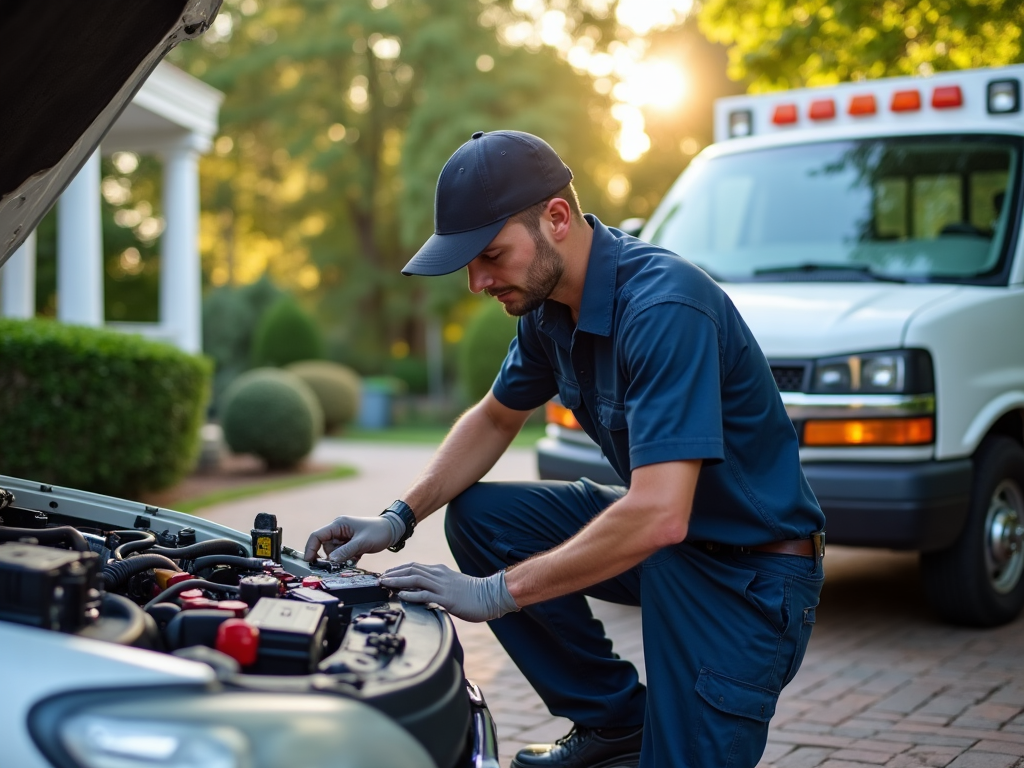
The visit starts with testing rather than guessing. The mechanic runs a load test on the battery, checks its state of charge, and measures the alternator output and the condition of the cables and terminals, so you know exactly what failed. If the battery is the problem, the old one comes out and the tray and hold-down get checked for corrosion or damage. The terminals and clamps are cleaned so they make solid contact, the new battery is set in place and secured so it cannot shift while you drive, and the cables are tightened to the right snugness. On vehicles that need it, the new battery is registered with the car’s computer on site. Before leaving, the mechanic starts the engine, confirms the alternator is charging at the right voltage, and makes sure there are no warning lights. The old battery goes with us for recycling, since lead and acid should never end up in the trash.
Where We Can Do the Work Around Charlotte
A battery change needs very little room, so it fits almost anywhere in the Charlotte area. We regularly work in driveways in Ballantyne and Matthews, apartment lots in University City and South End, office garages uptown, and on quiet streets in NoDa, Dilworth and Plaza Midwood. Parking decks and gated communities are fine as long as we can reach the car and the property allows vehicle repairs, so a quick check with the front desk or leasing office can save time. If the car is parked nose-in against a wall, let us know when you call, because we need access to the front of the vehicle. Tell us where the car is, what it did when you tried to start it, and whether it needed a jump recently, and the mechanic will come prepared with the right battery and tools.
How to Make Your Next Battery Last Longer
A few habits can add real life to a new battery. Have it tested once a year after the third year, ideally before summer, so a weak battery gets caught on your schedule instead of at the roadside. Keep the terminals clean and tight, and look for crust building up whenever you check the oil. If you park outside, shade helps, and a garage helps even more during the hottest months. Try to combine short errands into one longer drive now and then, so the alternator has time to bring the battery back to a full charge. If you plan to leave the car parked for more than two weeks, ask about a battery maintainer, which keeps it charged without overcharging. Finally, make sure accessories such as dash cams and chargers switch off with the car. Small steps like these can turn a three-year battery into a five-year one.
If you want the full details of what our battery service covers, from testing to fitting the right battery for your car, see Battery Replacement Charlotte, or browse every job we handle on Mobile Mechanic Services in Charlotte, NC.
FAQ
How long does a car battery last in Charlotte?
Many batteries last three to five years, and hot summers push that toward the shorter end. Having the battery tested once it passes three years old lets you replace it on your schedule instead of at the side of the road.
Can you test my battery without replacing it?
Yes. The mechanic load tests the battery and checks the alternator and cables, then tells you whether a replacement is needed now, soon or not at all.
Do you replace batteries in parking decks and apartment lots?
Usually yes. A battery change needs only a little room around the front of the car, so most parking decks, apartment lots and office garages work as long as the property allows vehicle repairs.
Why does my car need an AGM battery?
Cars with an engine start-stop feature or heavy electrical loads are built for AGM batteries, which handle frequent restarts better. Using a standard battery in those cars can shorten its life and trigger warning lights.
Will I lose my radio presets or settings?
Some cars reset the clock, radio stations or window settings when the battery is disconnected. The mechanic can tell you what to expect for your vehicle, and most settings take only a minute to restore.
What happens to my old battery?
We take it with us for recycling. Car batteries contain lead and acid, and nearly all of the materials can be reused, so they should never go in household trash.