Fast Radiator Repair Charlotte NC: Stop Overheating Before It Gets Worse
Few things make a driver more nervous than watching the temperature gauge creep toward the red on a hot afternoon. In Charlotte, long summer stretches and slow traffic on I-77 and Independence Boulevard put cooling systems under real strain, and the radiator is at the center of it all. Catching a problem early can mean a simple hose or cap replacement instead of a warped cylinder head. This guide explains how the cooling system works, the warning signs of radiator trouble, exactly what to do if your engine starts to overheat, the most common causes of leaks and blockages, and how a radiator repair works when the mechanic comes to your driveway or office lot.
Mobile Auto Repair Pros comes to you anywhere in the Charlotte area. Call 704-842-9774 and we will get a mechanic headed your way.
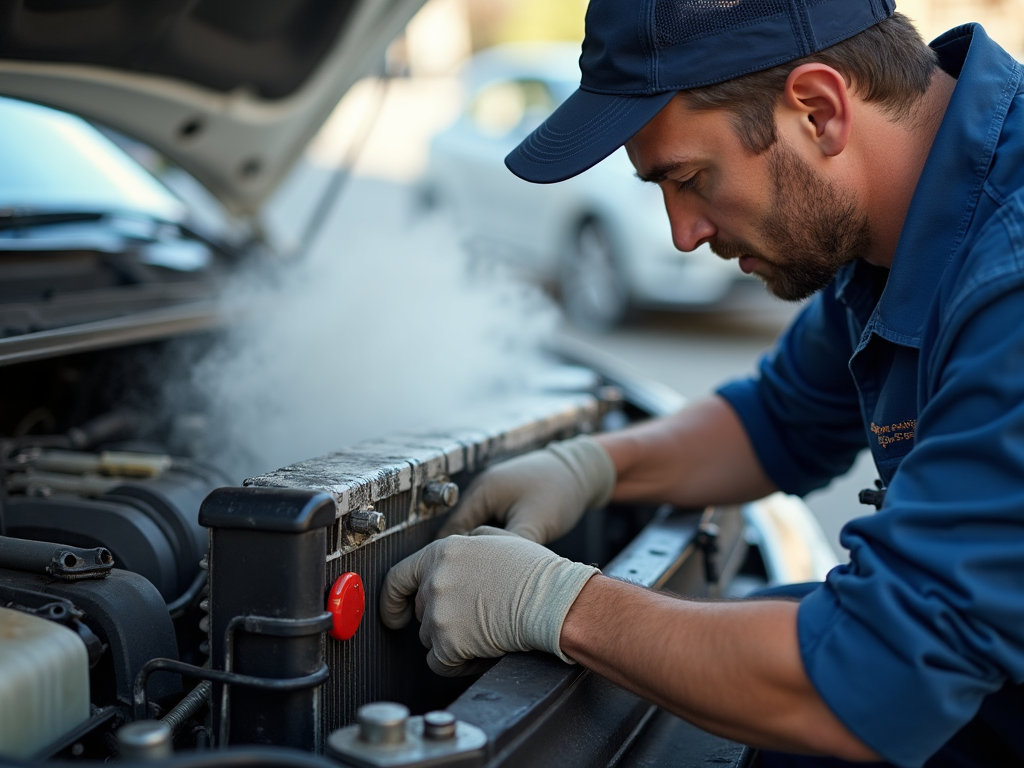
How Your Cooling System Works
An engine turns only part of the energy in fuel into motion. Much of the rest becomes heat, and without a way to remove it the metal would expand and parts would seize. Coolant, a mix of antifreeze and water, circulates through passages in the engine block and cylinder head, absorbing that heat. The water pump keeps it moving. A thermostat stays closed while the engine warms up, then opens to send hot coolant to the radiator at the front of the car. There, thin tubes and fins spread the coolant out so air flowing through the grille, helped by electric or belt-driven fans, can carry the heat away. Cooled coolant returns to the engine to repeat the loop. The radiator cap holds the system under pressure, which raises the boiling point of the coolant well above that of plain water.
Why Charlotte Traffic Is Hard on Radiators
A radiator relies on airflow. At highway speed, air rushes through the grille and cools the coolant easily. Sitting still in rush hour on I-485 or inching through uptown, the car depends entirely on its cooling fans, and a weak fan or partly clogged radiator shows up quickly. Summer afternoons in the 90s add to the load, especially with the A/C running, since the A/C condenser sits right in front of the radiator and adds its own heat. Towing a boat to Lake Norman or Lake Wylie, or carrying a heavy load up a grade, increases the strain further. Over the years, heat cycles also stress the plastic end tanks and rubber hoses, which is why many radiator leaks show up after several hot summers in a row.
Warning Signs of Radiator Trouble
The temperature gauge climbing higher than normal, or a high temperature warning light, is the clearest sign. Other clues include a sweet, syrupy smell after driving, puddles of green, orange or pink fluid under the front of the car, steam from under the hood, a coolant reservoir that keeps dropping, or a heater that blows cold air when the engine is warm, which can mean low coolant. Look at the radiator itself if you can: white or green crust on the fins or around the tanks marks an old leak. Coolant that looks rusty, sludgy or oily is a sign the system needs attention. If the low coolant light comes on, top it off only when the engine is cool and have the leak found soon.
What to Do If Your Engine Starts to Overheat
If the gauge rises into the red or the warning light comes on, act right away. Switch off the A/C to reduce the load on the engine, then turn the heater and fan to full hot. It feels wrong in summer, but the heater core works like a small extra radiator and can pull some heat away from the engine. If the gauge keeps climbing, pull over somewhere safe and shut the engine off. On I-77 or I-85, aim for an exit or a wide shoulder well away from traffic. Never open the radiator cap or the reservoir cap on a hot engine, because the coolant is under pressure and can spray out at boiling temperature. Wait at least thirty minutes for things to cool. Driving on with an overheating engine can warp the cylinder head or blow the head gasket, turning a modest repair into a major one.
Common Causes of Radiator Leaks and Blockages
Most radiators today have aluminum cores with plastic end tanks crimped on. Over time the plastic grows brittle and cracks, often along the seam where it meets the core. Rocks and debris kicked up on the highway can puncture the thin tubes. Old coolant loses its corrosion protection, which lets the inside of the radiator corrode and build up scale that blocks the narrow passages, so the radiator cannot shed heat even without a leak. Hoses soften, swell and split, and the clamps that hold them can loosen. A radiator cap with a worn seal lets the system lose pressure, which lowers the boiling point. Outside the radiator, a failing water pump, a stuck thermostat, a broken fan motor or a blown fuse for the fan can all cause overheating that looks like a radiator problem at first.
Repair or Replace the Radiator
Small problems are often a simple fix. A leaking hose, a loose clamp or a worn radiator cap can be replaced quickly and cheaply. Leaks in the radiator core or a cracked plastic tank are usually best handled by replacing the radiator, since patching aluminum cores or plastic tanks rarely lasts in the heat and pressure of a working cooling system. If the radiator is badly clogged inside, replacement is usually more reliable than trying to flush it clean. The mechanic pressure tests the system to find exactly where the coolant is escaping, checks the fans, thermostat and water pump, and explains whether a repair or replacement makes more sense for your car before any work begins.
How a Radiator Repair Works Where You Park
With the engine cool, the mechanic pressure tests the cooling system to find leaks, tests the radiator cap, checks the fans and inspects the hoses, thermostat and water pump. If the radiator needs replacing, the old coolant is drained into sealed containers, hoses and fan shroud are removed, and the radiator comes out. The new radiator is matched to your vehicle, installed with new clamps where needed, and the system is refilled with the coolant type your manufacturer specifies. Air pockets are bled out, since trapped air can cause hot spots and false gauge readings. The engine is then run until the thermostat opens and the fans cycle, and the mechanic watches the temperature and checks every connection for leaks before handing the car back.
Keeping Your Cooling System Healthy
Regular attention keeps most cooling problems from ever reaching the overheating stage. Check the coolant reservoir monthly with the engine cool, and top off with the correct coolant if it is low. Replace the coolant at the interval in your owner manual, since its corrosion inhibitors wear out over time. Have the hoses and belt checked at every oil change, especially before summer. Rinse bugs and leaves out of the front grille so air can reach the radiator. Never mix coolant types, because some combinations can gel and block passages. And if you notice the gauge reading higher than usual, have it looked at early, before a small leak becomes an overheating emergency.
Where We Can Do Radiator Work
Radiator work needs a level spot with room at the front of the car, which most driveways, apartment lots and office garages around Charlotte provide. We work regularly in Ballantyne, South End, NoDa, University City, Steele Creek, Matthews and Huntersville. Coolant work goes best with a cool engine, so an early morning slot at home or a car that has been parked for a while at work is ideal. Tell us what the gauge is doing, whether you have seen leaks or steam, and the year, make and model, and the mechanic will bring the pressure tester, coolant and the parts most likely to be needed.
If you want the full details of what our radiator service covers, from pressure testing to radiator replacement, see Auto Radiator Repair Service Charlotte, or browse every job we handle on Mobile Mechanic Services in Charlotte, NC.
FAQ
Can I drive with a leaking radiator?
Only for short distances, and only while watching the temperature gauge closely and keeping the coolant topped off. A leak can get worse without warning, so it is safer to have it repaired soon.
Why is my car overheating in traffic but fine on the highway?
That pattern often points to a weak cooling fan, a fan relay or fuse problem, or a partly clogged radiator, since the car depends on the fans when there is no airflow from driving.
Can I use water instead of coolant?
Plain water can get you to safety in an emergency, but it lacks corrosion protection and boils sooner. Have the system drained and refilled with the correct coolant afterward.
How long does a radiator replacement take?
On many cars it takes about two to three hours, including draining, refilling and bleeding the system. Some vehicles take longer because of their layout.
Why does my coolant keep disappearing with no visible leak?
The coolant may be leaking somewhere hot enough to evaporate it, such as the water pump, or internally through a head gasket. A pressure test helps find the source.
How often should coolant be replaced?
It depends on the coolant type. Many modern long-life coolants last five years or more, while older types need changing more often. Your owner manual lists the interval for your car.