Expert Exhaust Leak Repair Charlotte NC: Quiet, Efficient Driving
An exhaust leak usually announces itself with noise: a ticking sound at startup, a deeper rumble than usual, or a roar that seems to get louder every week. It is easy to put off, but an exhaust leak is more than an annoyance. It can let harmful gases into the cabin, hurt fuel economy, set off the check engine light and fail the emissions portion of the yearly inspection in Mecklenburg County. This guide explains how the exhaust system works, the signs of a leak, why it matters for your safety, the most common causes, and how an exhaust leak repair works when a mechanic comes to your driveway or office lot in Charlotte.
Mobile Auto Repair Pros comes to you anywhere in the Charlotte area. Call 704-842-9774 and we will get a mechanic headed your way.
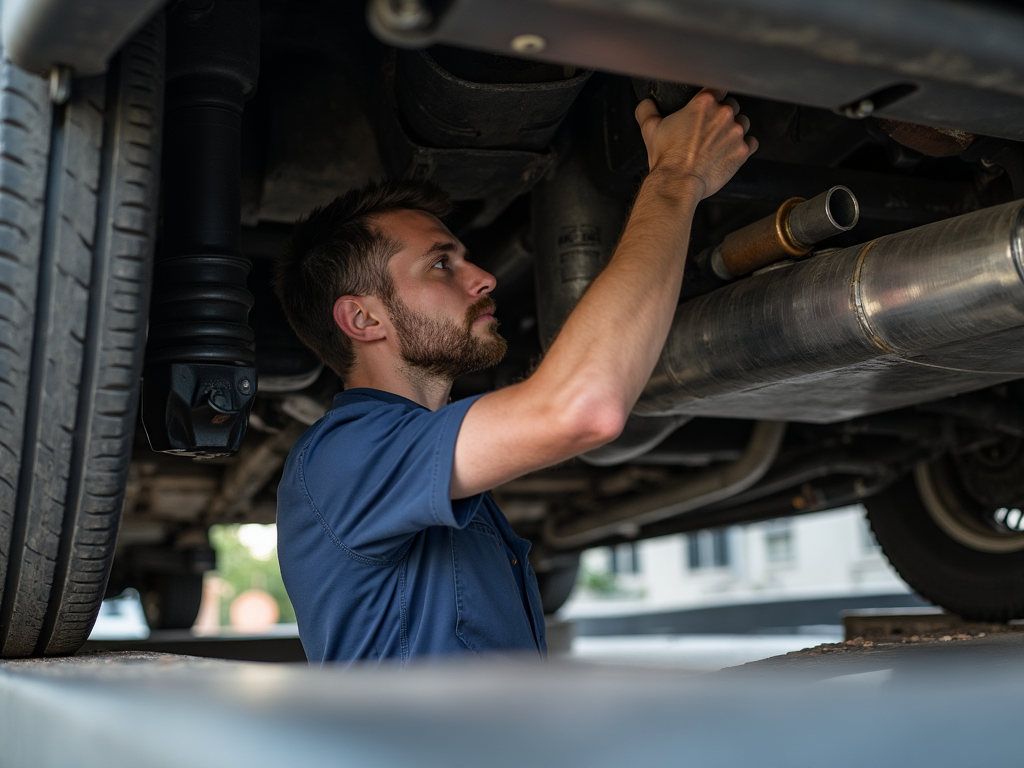
How Your Exhaust System Works
The exhaust system carries burned gases from the engine to the back of the car while quieting the noise and cleaning up harmful emissions. It starts at the exhaust manifold, which collects gases from each cylinder and is bolted to the engine with a gasket. From there the gases pass through a flex pipe, which allows for engine movement, then the catalytic converter, which turns harmful gases into less harmful ones. Oxygen sensors before and after the converter report to the engine computer. The gases then flow through pipes, one or more resonators and the muffler before exiting the tailpipe. Hangers and clamps hold the whole system in place under the car. A leak anywhere along that path lets gases escape before they are cleaned and quieted.
Signs of an Exhaust Leak
Noise is the most common sign. A ticking or tapping sound that is loudest on a cold start and fades as the engine warms often means a leak at the exhaust manifold, where metal expands and seals the gap once hot. A louder rumble or roar, especially when accelerating, usually points to a hole in a pipe, a failed flex pipe or a rusted muffler. Other signs include a smell of exhaust inside the car, a vibration felt through the floor or gas pedal, a drop in fuel economy and a check engine light, since a leak upstream of an oxygen sensor can confuse the engine computer. Look under the car for black soot marks around joints, rusted sections or a pipe hanging lower than it should.
Why an Exhaust Leak Is a Safety Issue
Exhaust gases contain carbon monoxide, which has no color or smell and can cause headaches, dizziness, nausea and drowsiness at low levels, and far worse at higher levels. A leak under the car, especially near the front, can let those gases find their way into the cabin through gaps in the body, particularly when the car is idling in traffic or stopped with the windows closed. If you notice an exhaust smell inside the car, or feel lightheaded or unusually tired while driving, open the windows and have the car checked as soon as possible. Exhaust leaks near fuel lines, wiring or plastic parts can also create heat damage. This is one repair that is worth doing promptly.
Common Causes of Exhaust Leaks
Exhaust parts live in a harsh environment. They heat up to several hundred degrees every drive, then cool down again, and that constant expansion and contraction stresses welds, gaskets and bolts. Moisture forms inside the system as a byproduct of combustion, and on short trips it never gets hot enough to evaporate, so the pipes and muffler rust from the inside out. Charlotte humidity and the occasional winter brine on roads add rust from the outside. Manifold bolts and studs can loosen or snap, letting the gasket blow out. Flex pipes crack from engine movement over time. Hitting a speed bump, curb or road debris can dent or tear a pipe, and broken hangers let the system sag and stress its joints.
How Exhaust Leaks Affect Inspection and Performance
In Mecklenburg County, most gasoline cars need an emissions check as part of the yearly inspection, and that test reads the engine computer. A leak ahead of an oxygen sensor can pull in outside air, making the sensor report a lean condition and setting a check engine light, which is an automatic fail. Leaks can also affect how the engine adjusts its fuel mixture, reducing power and fuel economy. A loud exhaust from a hole or missing muffler can also draw attention during the safety check. Fixing the leak before inspection time saves a failed result and a second trip to the station.
Repair Options for Exhaust Leaks
The right repair depends on where the leak is and how much rust surrounds it. A leaking manifold gasket is replaced along with any broken studs. A cracked flex pipe can often be replaced as a section. Small holes in otherwise solid pipe can sometimes be patched or clamped, but patches rarely last on badly rusted pipe, so replacing the damaged section is usually the better value. Rusted-through mufflers and resonators are replaced. Broken hangers and loose clamps are inexpensive fixes that can prevent bigger damage. If the catalytic converter itself is cracked or failing, the mechanic explains the options and costs plainly. You get the recommendation and the price before any work starts.
How an Exhaust Leak Repair Works Where You Park
The mechanic starts with the engine cool, listening at startup and as it warms to locate the sound. The car is safely raised and supported, and the whole system is inspected from the manifold to the tailpipe for soot marks, holes, cracks, rust and broken hangers. Sometimes a smoke test or a quick check with the engine running helps pinpoint a small leak. Once the source is found, you get a plain explanation and a price. Old parts are removed, which may mean cutting through rusted clamps or penetrating seized bolts, and new gaskets, sections, flex pipes or mufflers are fitted with new clamps and hangers as needed. The engine is started and checked for leaks and rattles, and the check engine light is cleared once the repair is confirmed.
What Can Be Done On Site and What Needs a Shop
Many exhaust repairs, including manifold gaskets, bolt-on flex pipes, clamp-on sections, mufflers and hangers, can be handled in a driveway with the car safely raised. Jobs that require welding new pipe into place or custom bending are better suited to a muffler shop with welding and pipe-bending equipment. Some exhaust manifold repairs with seized or broken studs may also need specialized tools. The mechanic will tell you plainly which category your repair falls into, so you can make the right decision without paying for a visit that cannot finish the job.
Helping Your Exhaust System Last Longer
Most exhaust rust starts from the inside, so how you drive matters. A longer drive of twenty minutes or more every week or two lets the system get hot enough to boil off the moisture that collects inside the pipes and muffler on short trips. Slow down for speed bumps and steep driveway entrances so the pipes and hangers do not scrape. Have the hangers and clamps checked whenever the car is up for an oil change or tire rotation, since a broken hanger lets the system sag and crack at the joints. Wash the underside of the car after the occasional winter storm when roads have been treated with brine. And if you hear a new tick, rattle or rumble, have it checked early, because a small leak at a gasket is far cheaper to fix than a section that has rusted through.
Where We Can Repair Your Exhaust
Exhaust work needs a flat, firm surface where the car can be raised safely, which most driveways, apartment lots and office garages around Charlotte provide. We regularly handle exhaust repairs in Ballantyne, South End, NoDa, University City, Steele Creek, Matthews and Mint Hill. Because exhaust parts get very hot, a morning visit or a car that has been parked for a while is best. Tell us what the noise sounds like, when it happens, whether the check engine light is on, and the year, make and model, and the mechanic will arrive with the right tools and the most likely parts.
If you want the full details of what our exhaust service covers, from manifold gaskets to mufflers and flex pipes, see Exhaust Charlotte, or browse every job we handle on Mobile Mechanic Services in Charlotte, NC.
FAQ
Is it safe to drive with an exhaust leak?
Short trips may be possible, but a leak can let carbon monoxide into the cabin. If you smell exhaust inside the car, open the windows and have it checked soon.
Why is my exhaust ticking on cold starts?
A tick that fades as the engine warms often points to a leaking exhaust manifold gasket or a broken manifold stud, since the metal expands and seals the gap once hot.
Can an exhaust leak turn on the check engine light?
Yes. A leak ahead of an oxygen sensor can pull in outside air, making the sensor report a lean condition and setting a code.
Will an exhaust leak fail my inspection?
It can. If the leak sets a check engine light, the car fails the emissions portion of the inspection in Mecklenburg County.
How long does an exhaust leak repair take?
It depends on the location and the amount of rust. A muffler or clamp-on section may take about an hour, while a manifold gasket with broken studs can take longer.
Can a hole in the exhaust be patched?
Small holes in solid pipe can sometimes be patched, but patches rarely last on rusted pipe. Replacing the damaged section is usually the longer-lasting fix.