Honest Transmission Service Charlotte NC: No Upsell, Just the Fix
Transmission trouble has a reputation for being expensive, and that fear leads many drivers to put off a check until a small problem becomes a big one. The truth is that plenty of shifting complaints come from low or worn fluid, a faulty sensor or a software issue rather than a failing transmission. Charlotte driving, with its stop-and-go rush hours and summer heat, is hard on transmission fluid, which makes regular attention worth it. This guide explains how an automatic transmission works, the warning signs to watch for, why fluid condition matters so much, which problems are often simple to fix, and how a transmission service works when a mechanic comes to your driveway or office lot.
Mobile Auto Repair Pros comes to you anywhere in the Charlotte area. Call 704-842-9774 and we will get a mechanic headed your way.
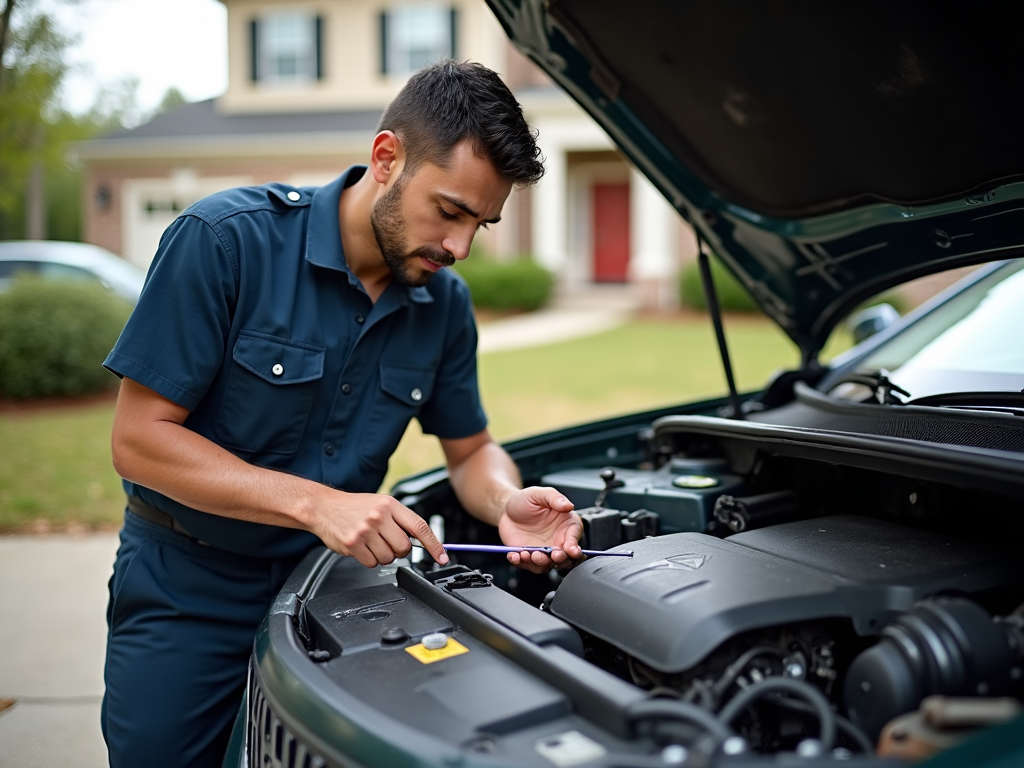
How an Automatic Transmission Works
An automatic transmission lets the engine stay in its useful speed range while the car moves from a standstill to highway speed. A torque converter links the engine to the transmission through fluid rather than a mechanical clutch, which lets the car sit still in gear at a red light. Inside the transmission, sets of gears and clutch packs are engaged and released by fluid pressure, directed by valves in a valve body. On modern cars, a transmission control module reads vehicle speed, throttle position and engine load, then uses solenoids to time each shift. Many newer vehicles use a continuously variable transmission, or CVT, which uses a belt or chain between two pulleys instead of fixed gears. Either way, the fluid does three jobs at once: it carries the pressure that makes shifts happen, it lubricates the moving parts, and it carries heat away.
Why Charlotte Driving Is Hard on Transmissions
Heat is the main enemy of transmission fluid. Every shift and every moment of slipping inside the torque converter creates heat, and stop-and-go traffic creates a lot of both. Crawling along I-77 or Independence Boulevard at rush hour means constant shifting between first and second gear with little airflow to cool things down. Summer temperatures in the 90s push fluid temperatures higher still. Towing a boat or trailer to Lake Norman, climbing grades with a full load, or running errands in short trips that never let the fluid warm up properly all add wear. As fluid overheats, it breaks down, loses its friction properties and leaves varnish that can make valves stick. That is why many manufacturers list a shorter fluid interval for severe driving conditions.
Warning Signs Your Transmission Needs Attention
Slipping is one of the most common signs: the engine revs up but the car does not accelerate the way it should, as if it is briefly in neutral. Other signs include delayed engagement when you shift into drive or reverse, harsh or clunky shifts, shifts that happen too early or too late, a shudder at certain speeds, or a car that seems stuck in one gear. That last one is often a protective mode the computer uses when it detects a fault. Listen for whining, humming or buzzing noises that change with speed. A burning smell, red or brown fluid under the middle of the car, or a check engine or transmission warning light all deserve a prompt look.
Why Fluid Condition Matters So Much
Fresh automatic transmission fluid is usually bright red and almost clear, with little smell. As it ages, it darkens to brown and can smell burnt. Fluid that is dark, burnt or full of fine particles has lost much of its ability to protect the transmission. Low fluid is just as serious, because the transmission depends on a full supply to build pressure; even a small leak can cause slipping and overheating. Many cars no longer have a transmission dipstick, so checking the level properly often means raising the car and checking at a fill plug with the fluid at a set temperature. Using the exact fluid your manufacturer specifies matters, because transmissions are built around specific friction properties, and the wrong fluid can cause shudders and harsh shifts.
Problems That Are Often Simpler Than They Seem
Not every shifting complaint means a rebuild. Low fluid from a leaking pan gasket, cooler line or seal is common and often fixed with a gasket or line replacement and a refill. Old fluid can cause rough shifts that improve after a proper fluid service. A faulty speed sensor or shift solenoid can confuse the transmission computer and cause erratic shifting, and these parts can often be replaced without removing the transmission. A weak battery or poor ground connection can upset the electronics. Some vehicles have software updates from the manufacturer that improve shift quality. Engine problems such as misfires can also feel like transmission trouble. Proper diagnosis sorts out which of these you are dealing with before anyone talks about major repairs.
Fluid Service: Drain and Fill or Flush
There are two common ways to refresh transmission fluid. A drain and fill removes the fluid from the pan, which usually replaces a portion of the total, since much of it stays in the torque converter and lines. On many vehicles, the filter or screen is replaced at the same time and the pan gasket is renewed. Repeating the drain and fill over a few services gradually replaces the rest. A machine exchange, often called a flush, cycles fresh fluid through the whole system. Which method suits your car depends on its design, its mileage and the condition of the fluid. On high-mileage transmissions that have never had a fluid change, the mechanic may recommend a gentler approach. You get the reasoning and the price before any work begins.
How a Transmission Service Works Where You Park
The visit starts with questions about what you have noticed and when it happens: cold or warm, light acceleration or hard, at certain speeds or all the time. The mechanic scans the transmission computer for stored codes, checks live data such as fluid temperature and gear selection, and road tests the car when it is safe to do so. The fluid level and condition get checked the correct way for your vehicle, and the pan, lines and seals are inspected for leaks. If a fluid service is the right step, the old fluid is drained into sealed containers, the filter and gasket are replaced where applicable, and the transmission is refilled with the specified fluid to the correct level at operating temperature. A final road test confirms the shifts feel right before the mechanic leaves.
When a Shop Is the Better Choice
We believe in telling you plainly what can and cannot be done in a driveway. Fluid service, leak repairs, sensors, solenoids accessible from outside, cooler lines and many electrical faults can be handled on site. Internal repairs, such as replacing worn clutch packs or a failed torque converter, and full transmission replacement need a lift and heavy equipment. If the diagnosis points to that kind of work, the mechanic explains what was found and what it means, so you can make an informed decision about where to take the car. You will never be pushed into a big repair you do not need.
Where We Can Service Your Transmission
Transmission service needs a flat, firm spot with room to work under and around the car, which most driveways, apartment lots and office garages around Charlotte provide. We regularly work in Ballantyne, South End, University City, Steele Creek, Mint Hill, Matthews and Huntersville. If the car is in limp mode or will not move, tell us when you call so the mechanic can plan for it. Share the year, make, model and mileage, along with what the transmission is doing, and the mechanic will bring the right fluid, scan tool and parts.
If you want to see everything our transmission repair service covers, from fluid service to leak and sensor repairs, see Transmission Repair Charlotte, or browse every job we handle on Mobile Mechanic Services in Charlotte, NC.
FAQ
How often should transmission fluid be changed?
It depends on the vehicle. Many manufacturers list an interval between 30,000 and 60,000 miles for severe driving, which includes heavy traffic and hot weather. Your owner manual gives the exact number.
Why is my car stuck in one gear?
Many transmissions go into a protective mode when the computer detects a fault, holding one gear so you can still drive slowly. A scan for codes is the first step to find out why.
Can a fluid change fix slipping?
If the slipping comes from low or worn fluid, a proper fluid service can help. If internal parts are worn, fluid alone will not fix it. Diagnosis tells you which applies.
Is it bad to change old transmission fluid on a high-mileage car?
Usually it is better to keep fluid fresh, but on a high-mileage transmission that has never been serviced, the mechanic may recommend a gentler approach and will explain the reasoning first.
What color should transmission fluid be?
Fresh automatic transmission fluid is usually bright red and nearly clear. Brown, dark or burnt-smelling fluid is a sign it needs attention.
Do you service CVT transmissions?
Yes. CVTs need their own specific fluid and procedure. Give us the year, make and model so the mechanic brings the correct fluid.