Professional Suspension Repair Charlotte NC: Smoother, Safer Ride
A healthy suspension is something you only notice once it starts to go. The car begins to bounce over bumps, clunk over potholes, lean hard in turns or pull to one side, and the ride that used to feel solid turns loose and noisy. Charlotte roads, with their patches of construction, railroad crossings and summer-cracked asphalt, give suspension parts plenty of work. This guide explains how your suspension works, the warning signs of worn parts, how local roads take their toll, why an alignment matters after many repairs, and how a suspension repair works when a mechanic comes to your driveway or office lot.
Mobile Auto Repair Pros comes to you anywhere in the Charlotte area. Call 704-842-9774 and we will get a mechanic headed your way.
What Your Suspension Actually Does
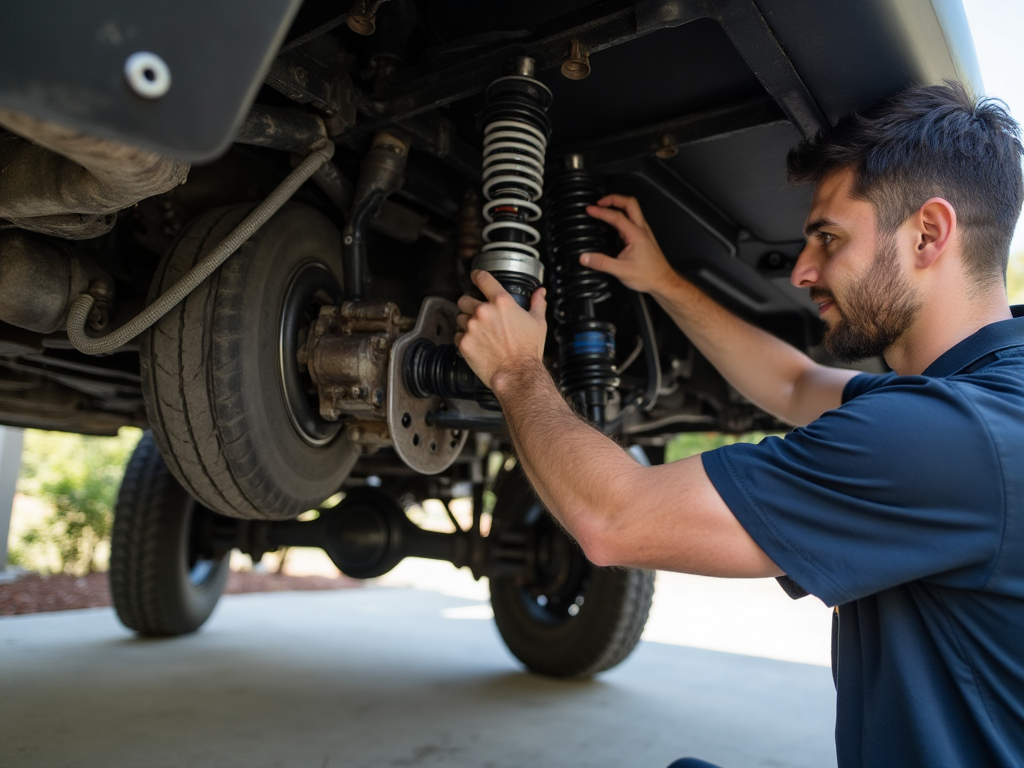
The suspension connects the wheels to the body of the car and has two jobs that pull in opposite directions: keeping the ride comfortable and keeping the tires firmly on the road. Springs, either coil springs or leaf springs, hold up the weight of the car and absorb bumps. Shock absorbers and struts control how fast the springs compress and rebound, so the car does not keep bouncing after each bump. Control arms, ball joints and bushings let the wheels move up and down while holding them in the right position. Sway bars and their links reduce body lean in turns. Tie rods connect the steering to the wheels. When all of these parts are in good shape, the tires stay in contact with the road, which is essential for braking, steering and stability.
How Charlotte Roads Take Their Toll
Constant growth in the Charlotte area means constant road work, and that brings steel plates, uneven lane shifts and patched asphalt on roads like Independence Boulevard, Providence Road and parts of I-77. Freight and light rail crossings in South End and along North Tryon Street deliver sharp jolts. Summer heat followed by winter freeze-thaw cycles cracks asphalt and opens potholes. Speed bumps in neighborhoods and apartment complexes add steady wear. Each hard impact strains shocks, struts, ball joints and bushings, and a single deep pothole can bend a control arm or knock the alignment out. Over years of daily commuting, these impacts add up, so suspension parts in a city car often wear sooner than the mileage alone would suggest.
Warning Signs of Worn Suspension Parts
Excess bouncing after a bump, or a floaty feeling at highway speed, usually points to worn shocks or struts. A clunk or knock over bumps or when turning can mean worn ball joints, sway bar links, strut mounts or control arm bushings. If the nose dives sharply when you brake or the rear squats when you accelerate, the shocks are likely tired. A car that leans heavily in turns may have worn sway bar parts. Pulling to one side, a steering wheel that is off-center, or steering that feels loose or wanders can come from worn tie rods or an alignment problem. Look at the tires too: cupping, scalloped wear or wear on one edge often traces back to suspension issues. Oily residue on a shock or strut body means it is leaking and no longer doing its job.
Why Worn Suspension Is a Safety Issue
A worn suspension is not just uncomfortable. When shocks and struts cannot keep the tires pressed against the road, braking distances get longer, especially on rough or wet roads, and the car is more likely to skid in a sudden stop. Worn parts can cause the car to sway in crosswinds or wander on the highway, making it tiring and harder to control. A worn ball joint can separate, which can cause a loss of steering control. Uneven tire wear shortens the life of expensive tires and can reduce grip in heavy rain, which Charlotte gets plenty of during summer thunderstorms. Having the suspension checked when symptoms appear protects both your safety and your tires.
Common Suspension Repairs
Shocks and struts are among the most common replacements, typically done in pairs on the same axle so the car handles evenly. Many struts now come as complete assemblies with the spring and mount already installed, which speeds up the job and replaces worn mounts at the same time. Sway bar links wear often and are a frequent cause of clunking noises. Ball joints, control arms and their bushings wear with age and impacts. Tie rod ends wear and cause loose steering. Coil springs can sag or crack over time, leaving the car sitting lower on one corner. The mechanic inspects each part and tells you plainly which ones are worn and which are still fine.
Why an Alignment Usually Follows
Replacing struts, control arms, tie rods or other parts that locate the wheels changes the alignment angles. Alignment refers to how the wheels point relative to each other and to the road, measured as toe, camber and caster. If the alignment is off, the car may pull to one side, the steering wheel may sit crooked, and the tires wear unevenly. After many suspension repairs, an alignment is needed to set those angles back to the manufacturer’s specifications. Alignments require a specialized machine, so the mechanic will tell you when one is needed and can point you to a nearby alignment shop. Getting it done soon after the repair protects your new tires and parts.
How a Suspension Repair Works Where You Park
The mechanic starts with a test drive where it is safe, listening for noises and feeling how the car handles bumps, turns and braking. The car is then lifted and supported safely so each wheel can be checked for play, worn bushings, leaking shocks and damaged parts. You get a plain explanation of what is worn, what is still good and what it will cost, before any work begins. Once you approve, the worn parts are replaced with ones matched to your vehicle, bolts are tightened to the manufacturer’s torque specs, and the car is lowered so the suspension settles at its normal ride height before final tightening where required. A final test drive confirms the noises are gone and the car rides and steers properly.
Making Suspension Parts Last Longer
You cannot avoid every pothole, but a few habits help. Slow down for speed bumps, railroad crossings and rough patches, since the impact force rises sharply with speed. Steer around potholes when it is safe, and avoid hitting curbs when parking. Keep the tires at the correct pressure, because underinflated tires transfer more shock to the suspension. Avoid regularly overloading the car or truck beyond its rated capacity. Have the suspension and steering checked once a year or whenever the tires are rotated, and pay attention to new noises, since a worn sway bar link caught early is a small repair.
Where We Can Repair Your Suspension
Suspension work needs a flat, firm surface with enough room to lift the car and remove the wheels safely. Most driveways, apartment lots and office garages around Charlotte meet that need. We regularly handle suspension jobs in Ballantyne, South End, NoDa, University City, Steele Creek, Mint Hill and Matthews. If your property has rules about vehicle repairs, a quick check with the leasing office first saves time. Tell us what the car is doing, any noises you hear, and the year, make and model, and the mechanic will arrive with the tools and the parts most likely to be needed.
If you want the full details of what our steering and suspension service covers, from struts and shocks to ball joints and tie rods, see Steering & Suspension Repair Charlotte, or browse every job we handle on Mobile Mechanic Services in Charlotte, NC.
FAQ
How do I know if my shocks or struts are worn?
Signs include extra bouncing after bumps, a floaty ride at highway speed, nose dive when braking, oily residue on the shock body and uneven tire wear.
Should shocks and struts be replaced in pairs?
Yes. Replacing them in pairs on the same axle keeps the car handling evenly, since a new part on one side and a worn one on the other can make the car unstable.
What causes a clunking noise over bumps?
Common causes include worn sway bar links, ball joints, strut mounts or control arm bushings. An inspection pinpoints which part is loose.
Do I need an alignment after suspension work?
Often yes, especially after replacing struts, control arms or tie rods. The mechanic will tell you if your repair needs one.
How long does a suspension repair take?
It depends on the part. A pair of sway bar links may take under an hour, while a pair of complete struts often takes two to three hours.
Can a pothole damage my suspension?
Yes. A hard pothole hit can bend control arms, damage struts and knock the alignment out. If the car pulls or makes new noises afterward, have it checked.