Affordable Oil Change Charlotte NC: Mobile Service Nearby
An oil change is the simplest job on the maintenance list, and it is also the one that does the most to protect your engine. Clean oil keeps metal parts from grinding against each other, carries heat away from the hottest spots and holds dirt in suspension until the filter can catch it. In Charlotte, the mix of summer heat, rush-hour traffic and short trips around town is harder on oil than many drivers realize, so the interval on the windshield sticker is not always the right one. This guide covers how oil wears out, why local driving often counts as severe service, the signs your oil is due, how to choose the right oil and filter, and how an oil change works when the mechanic comes to your driveway or office lot.
Mobile Auto Repair Pros comes to you anywhere in the Charlotte area. Call 704-842-9774 and we will get a mechanic headed your way.
What Engine Oil Actually Does
Inside a running engine, pistons slide up and down thousands of times a minute and the crankshaft spins on thin bearings. Oil forms a film between those moving parts so they never quite touch. It also cools the parts the coolant cannot reach, such as the underside of the pistons, and it carries soot, metal particles and combustion byproducts to the filter. Additives in the oil fight corrosion, prevent sludge and keep the oil flowing at the right thickness across a wide range of temperatures. Over time, heat breaks down those additives, fuel and moisture dilute the oil, and the filter fills up. Once that happens, the oil cannot protect the engine the way it should, and wear speeds up quietly long before any warning light appears.
Why Charlotte Driving Counts as Severe Service
Most owner manuals list two maintenance schedules: normal and severe. Severe service usually means hot weather, frequent idling, stop-and-go traffic and lots of short trips under about ten miles. A typical Charlotte week checks every one of those boxes. Crawling along I-77 or I-485 at rush hour keeps the engine hot with little air moving through the radiator. Summer afternoons regularly push past 90 degrees. Quick runs to the grocery store or school pickup never let the oil fully warm up and burn off the moisture and fuel that collect in it. If most of your miles are in town or in traffic, plan on following the severe-service interval in your manual rather than the longer number. Your oil life monitor, if your car has one, already factors in many of these conditions.
Signs Your Oil Is Due Before the Sticker Says So
Check the dipstick once a month with the engine off and the car on level ground, waiting a few minutes after shutting it down so the oil drains back. Oil that looks dark and gritty, smells burnt, or sits below the low mark needs attention. Other signs include a ticking sound at startup that fades as the engine warms, a burning oil smell after a drive, blue smoke from the tailpipe, or the oil change reminder or oil pressure light coming on. Milky, light brown oil is a warning sign of coolant mixing with the oil and should be checked right away. If the oil pressure light stays on while you drive, pull over safely and switch the engine off, because running without pressure can ruin an engine in minutes.
Synthetic, Blend or Conventional
Your owner manual sets the oil grade, such as 0W-20 or 5W-30, and that grade matters more than the brand. The first number shows how easily the oil flows when cold, and the second shows its thickness at operating temperature. Many newer engines, especially turbocharged ones, require full synthetic oil. It resists breaking down in heat, keeps engines cleaner and holds up longer between changes, which suits Charlotte summers well. Synthetic blends sit in the middle on price and protection. Conventional oil still works well in older engines designed for it, as long as the change interval stays on the shorter side in hot weather. If you are not sure what your engine needs, give us the year, make, model and engine size, and the mechanic will bring the oil your manufacturer specifies.
Why the Oil Filter Matters as Much as the Oil
The filter traps the particles the oil picks up as it circulates. A clogged filter can go into bypass mode, which lets oil skip the filter entirely so the engine is not starved, but that means dirty oil flows straight through the bearings. A quality filter with the right fit, flow rate and anti-drainback valve keeps oil in the passages after shutdown, so the engine has pressure the moment it starts. That matters most on short trips, where cold starts make up a big share of engine wear. We replace the filter at every oil change and match it to your engine, because fresh oil running through an old filter gets dirty much faster.
How a Driveway Oil Change Works
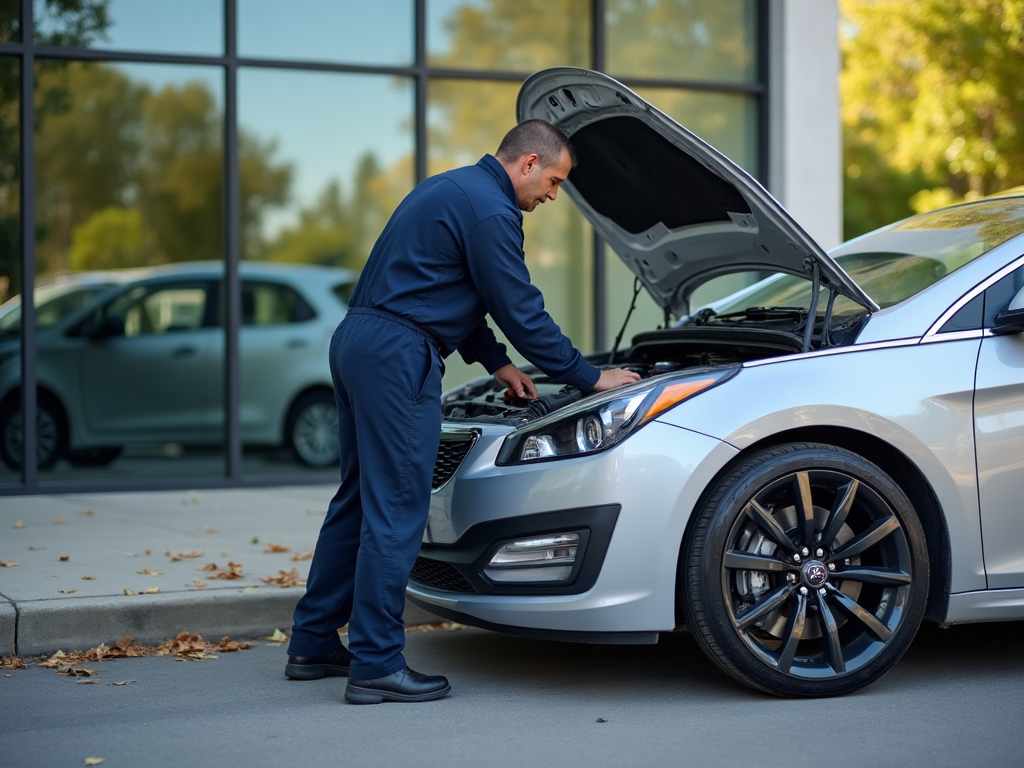
We need a level, safe spot with enough room to work beside the car, such as a driveway, an apartment lot or an office garage where the property allows it. The mechanic lets a hot engine cool briefly, then drains the old oil into a sealed container, replaces the filter, installs the drain plug with a new washer where required, and refills with the correct amount and grade. After running the engine for a minute, the level is rechecked and topped off, and the drain plug and filter are checked for leaks. While the hood is up, the mechanic looks at the coolant level, belts, hoses, air filter and other fluids, and tells you if anything else needs attention. The oil life reminder gets reset, and the used oil and filter leave with us for recycling.
Small Checks That Come With Every Oil Change
An oil change is a good chance to catch small problems early. The mechanic looks for oil leaks around the valve cover and oil pan, checks the condition of the drive belt for cracks, squeezes the radiator hoses for softness, and looks at the brake fluid and coolant levels and colors. A quick look at the tires can spot uneven wear that points to an alignment issue, and the engine air filter gets a visual check, which matters during the heavy spring pollen season in the Carolinas. None of these checks lead to a surprise charge. You get a plain explanation of what was found, and you decide whether and when to deal with it.
Timing an Oil Change Around Your Day
Plenty of Charlotte drivers book a weekday morning at work so the car is done before lunch, or a Saturday at home in the driveway. You do not need to stand outside the whole time, as long as the mechanic can reach the car and you have handed over the keys. In July and August an early slot is easier on everyone, since a hot engine needs a little time to cool before the drain plug comes out. If you have more than one car, booking them together on the same visit saves time and keeps both on schedule.
What Happens to the Old Oil
Used motor oil is a hazardous material that should never go down a storm drain or into the trash, where it can soak into the ground and reach creeks and Lake Norman. We collect the old oil and filter in sealed containers and take them to a licensed recycling center, where the oil can be cleaned and reused. That is one more reason a professional oil change is easier than doing it yourself, since there is nothing left behind for you to deal with afterward.
If you want the full picture of what our oil service covers, from oil types to what we check while the hood is open, see Oil Change Charlotte, or browse every job we handle on Mobile Mechanic Services in Charlotte, NC.
FAQ
How often should I change my oil in Charlotte?
Follow the severe-service interval in your owner manual if most of your driving is in town, in heavy traffic or in summer heat. For many cars that is noticeably shorter than the normal interval.
Can you change my oil in an apartment parking lot?
Usually yes, as long as the spot is level and safe and the property allows vehicle maintenance. A quick check with the leasing office first saves time.
Do I need to be there the whole time?
Not always. If the mechanic can reach the car and the keys are handed over safely, you can stay inside or keep working, and we will let you know when it is finished.
Is synthetic oil worth it?
If your engine requires it, synthetic is a must. For older engines it is optional, but it resists heat better and keeps engines cleaner, which suits hot Charlotte summers.
How long does a mobile oil change take?
Most oil changes take about 30 to 45 minutes on site, including the extra checks under the hood.
Will a mobile oil change affect my warranty?
No. Using the oil grade and filter your manufacturer specifies and keeping a record of the service keeps your warranty intact, wherever the work is done.